Short answer
Use a hanging mesh rack for loose leaves and flower heads when the drying space is clean, shaded, and well ventilated. Consider a dehydrator when you want controlled heat and trays, especially when ambient air drying is too slow or impractical. Follow the equipment maker’s instructions for loading and settings.
Penn State Extension recommends a dehydrator setting of 95°F to 110°F for herbs. Avoid treating one room-humidity number or a single temperature as a guarantee of a successful batch.
Hanging rack, dehydrator, or bundles
| Method | Works well when | Tradeoff to check |
|---|---|---|
| Hanging mesh rack | You need shelves for loose leaves or short-stemmed flowers that do not bundle neatly. | Allow air to move around the material, keep the rack away from direct sun, and check the rack’s capacity and hanging space. |
| Food dehydrator | You want enclosed trays and adjustable heat for a harvest that needs more controlled drying. | Check the lowest setting, usable tray area, timer, appliance footprint, and the manufacturer’s herb guidance. |
| Small tied bundles | Long, sturdy stems can hang with space between them in a clean, dry, shaded location. | Bundles need airflow and can dry unevenly if crowded or kept in a damp room. |
For method and temperature guidance, see Penn State Extension’s Let’s Preserve: Drying Herbs.
Equipment picks
Pick the rack or appliance that fits your harvest and drying space. Check the selected size, tray count, controls, and footprint on the current listing.
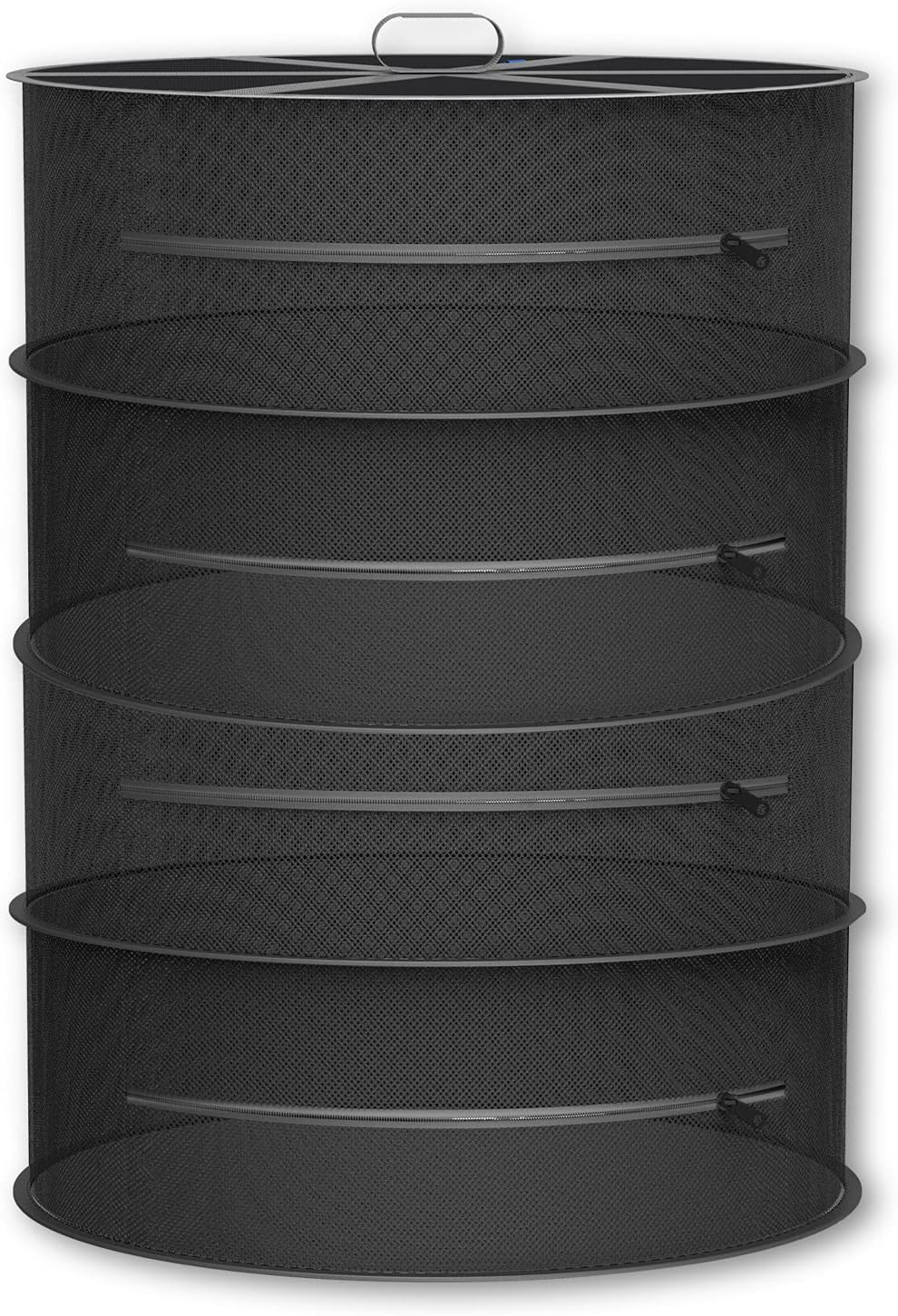
AC Infinity 4-layer collapsible mesh herb drying rack
A hanging rack for flat-laying loose leaves or flowers. The current listing offers size variants; confirm the selected tier count and dimensions.
Check the current listing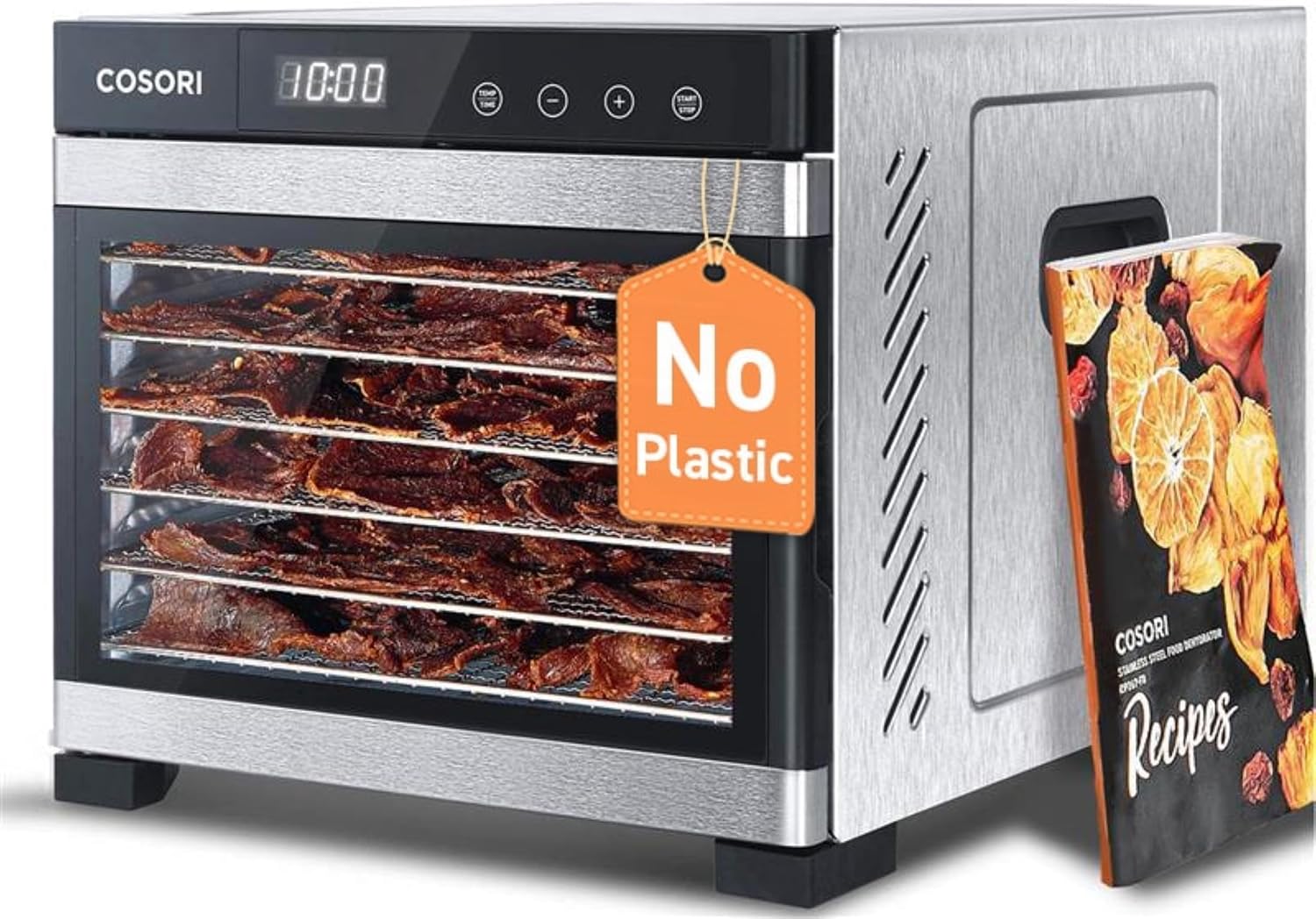
COSORI stainless steel food dehydrator, 6 trays
This six-tray model is listed with a 95°F–165°F temperature range. Check its current settings, dimensions, timer, and manual before choosing it for herbs.
Check the current listingThe maker lists the matching COSORI six-tray dehydrator model with a 95°F–165°F range. Product controls and listing details can change; confirm the current model.
Check that herbs are dry before storing
Follow the drying method guidance for the specific herb. Penn State Extension describes fully dried leaves as crispy and crumbly, with stems that break rather than bend. If the thickest parts still feel flexible, continue drying before putting the batch away.
Do not use a closed-jar waiting period or absence of visible condensation as proof that a batch is fully dry. Keep drying when you are unsure.
FAQ
What temperature should I use in a food dehydrator?
Penn State Extension recommends 95°F to 110°F for herbs. Check your appliance’s manual and select an appropriate setting within its actual controls.
When should I choose a dehydrator instead of air drying?
A dehydrator is useful when you need enclosed trays and adjustable heat or when the drying room is not suitable for passive airflow. It still needs the right loading, temperature, and drying time for the material.