
Is rue safe to use?
Do not purchase or use Rue / Herb of Grace.
Contact with fresh rue followed by ultraviolet exposure can cause a phototoxic skin reaction called phytophotodermatitis. Published dermatology reports describe this reaction with Ruta graveolens. Avoid touching fresh sap, cover skin, and use gloves when working around the plant. This page does not recommend eating rue or using it in home remedies.
This page is lore only.
Exposure note: EPA indoor-particle guidance says burning can add particles and advises ventilation. ASPCA plant entries address ingestion, not smoke exposure. See the sourced burning, pet and pregnancy lookup; neither source clears this plant as safe to burn.
At a glance
- Common name
- Rue / Herb of Grace
- Botanical name
- Ruta graveolens
- Family
- Rutaceae
- Parts mentioned in historical records
- Leaves
- Traditional correspondences
- Mars / Sun; Fire
Identification
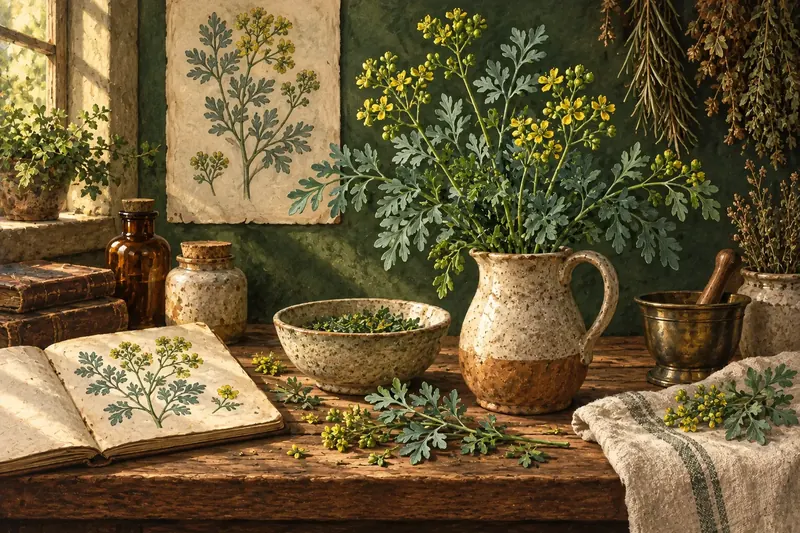
Common rue (Ruta graveolens) is a blue-green, divided-leaf subshrub with small yellow flowers. Kew's botanical profile describes the leaves as glaucous and pinnately divided. The illustration and these brief markers are not enough to identify a wild plant for use.
Historical record
Rue appears in Mediterranean and European folklore, including church traditions that used sprigs to sprinkle holy water. Historical ritual accounts are not instructions for using the plant.
Folklore and mythology
In some Italian folk traditions, a rue sprig appears in the Cimaruta amulet as a protective symbol. These are folkloric associations, not health advice.
European folklore also said rue grew best when taken from a neighbor's garden.
It was also used in church aspergillums for holy water and hung above kitchen fireplaces to keep out malicious witches.
Tradition: Mediterranean & Italian Witchcraft Associated figures: Diana / Aradia & Catholic Liturgy
Sources
- Kew's Ruta graveolens profile describes its botanical features.
- A dermatology case report documents phytophototoxicity associated with rue.
- DermNet's phytophotodermatitis overview explains the reaction after plant chemicals contact skin and are followed by sunlight exposure.
Mystical correspondences
Correspondences vary by tradition and source.