Which parts fit the workflow?
Match the funnel stem to the bottle opening and leave a path for displaced air. A 500 mL batch is eight nominal 60 mL fills (480 mL), with about 20 mL left before transfer losses.
That arithmetic is a volume estimate, not a promise that every bottle will take exactly 60 mL. Check the selected bottle, closure, funnel dimensions and vessel markings before buying or filling.
| Part | What the listing describes | What to check |
|---|---|---|
| Amber dropper bottles | One listing title and main image describe 2 oz / 60 mL amber bottles in a 24-pack. | The same listing description also contains conflicting text about 1 oz frosted black bottles. Confirm the selected variant, bottle color, capacity and closure before ordering. |
| Mini funnel | A three-piece stainless-steel funnel set; the listing describes a groove in the stem. | Compare the actual stem diameter with the bottle opening. A listed groove does not establish a fit with every neck. |
| Mixing vessel | A five-size borosilicate beaker set that includes a 500 mL beaker. | Check the set contents and use markings for approximate transfers, not precision formulation. |
| Graduated cylinder | A three-piece glass graduated-cylinder set in 10, 50 and 100 mL sizes. | Read the current graduations and any accuracy statement from the maker before relying on a measurement. |
How should I transfer liquid?
- Check the fit first. Compare the funnel stem and bottle opening; do not force metal against glass.
- Use a clean, stable work surface. Set the receiving bottle upright and keep the measuring marks visible.
- Pour slowly and pause if flow stalls. Give air time to escape, then continue in smaller amounts.
- Leave room at the top. Follow the bottle maker’s fill guidance and allow space for the dropper assembly.
Use an appropriately labeled vessel for the liquid’s intended purpose. This guide does not provide a recipe, preservation method or advice about ingesting a preparation.
Which listings are worth comparing?
These are examples to compare, not tested recommendations. Confirm the current title, selected option, package contents and dimensions before ordering.
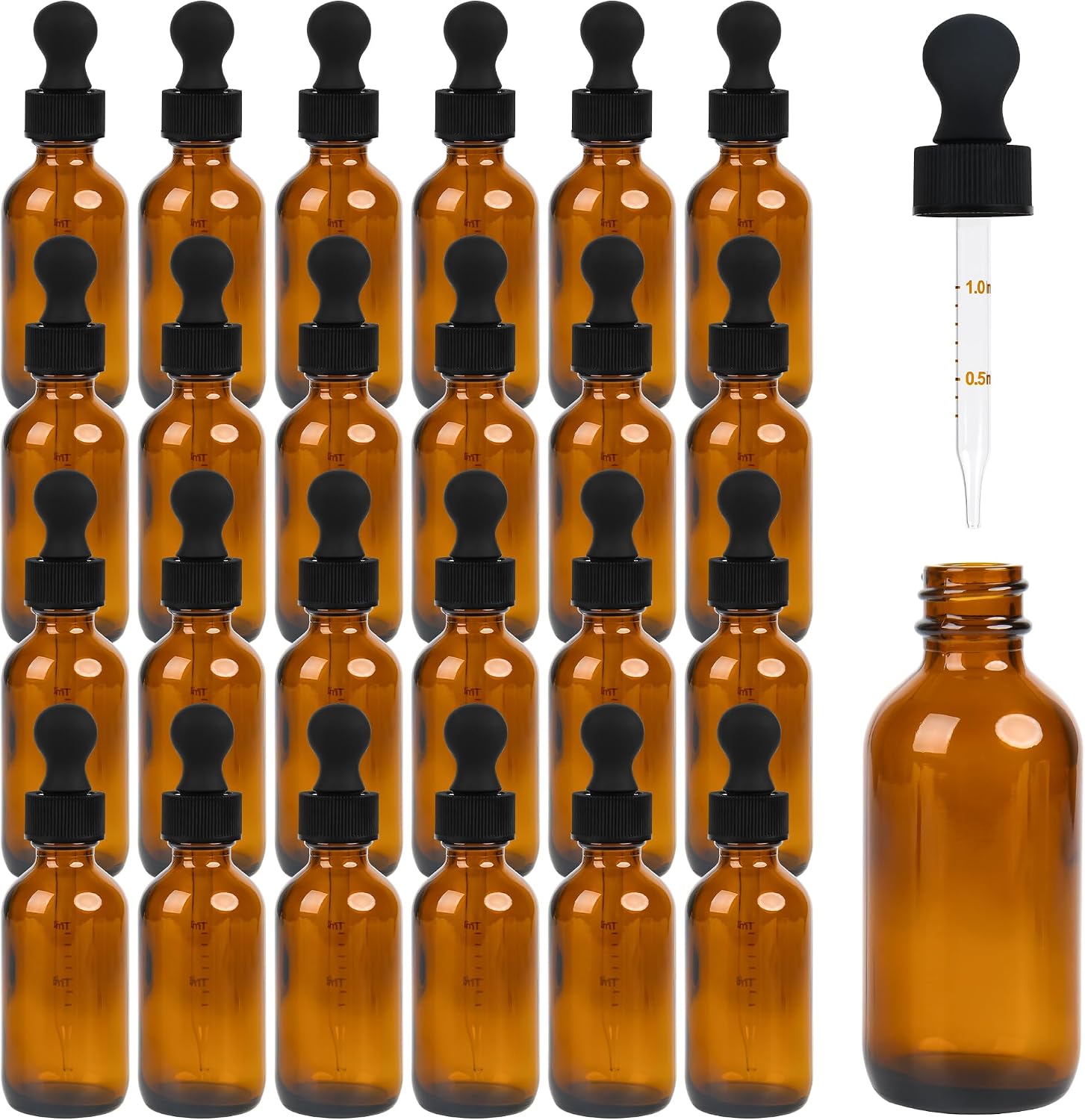
2 oz amber glass dropper bottles, 24-pack
The current title and main image describe amber 2 oz bottles. The page also includes conflicting 1 oz frosted-bottle text, so verify the selected variant before ordering.
Check the bottle variant and closure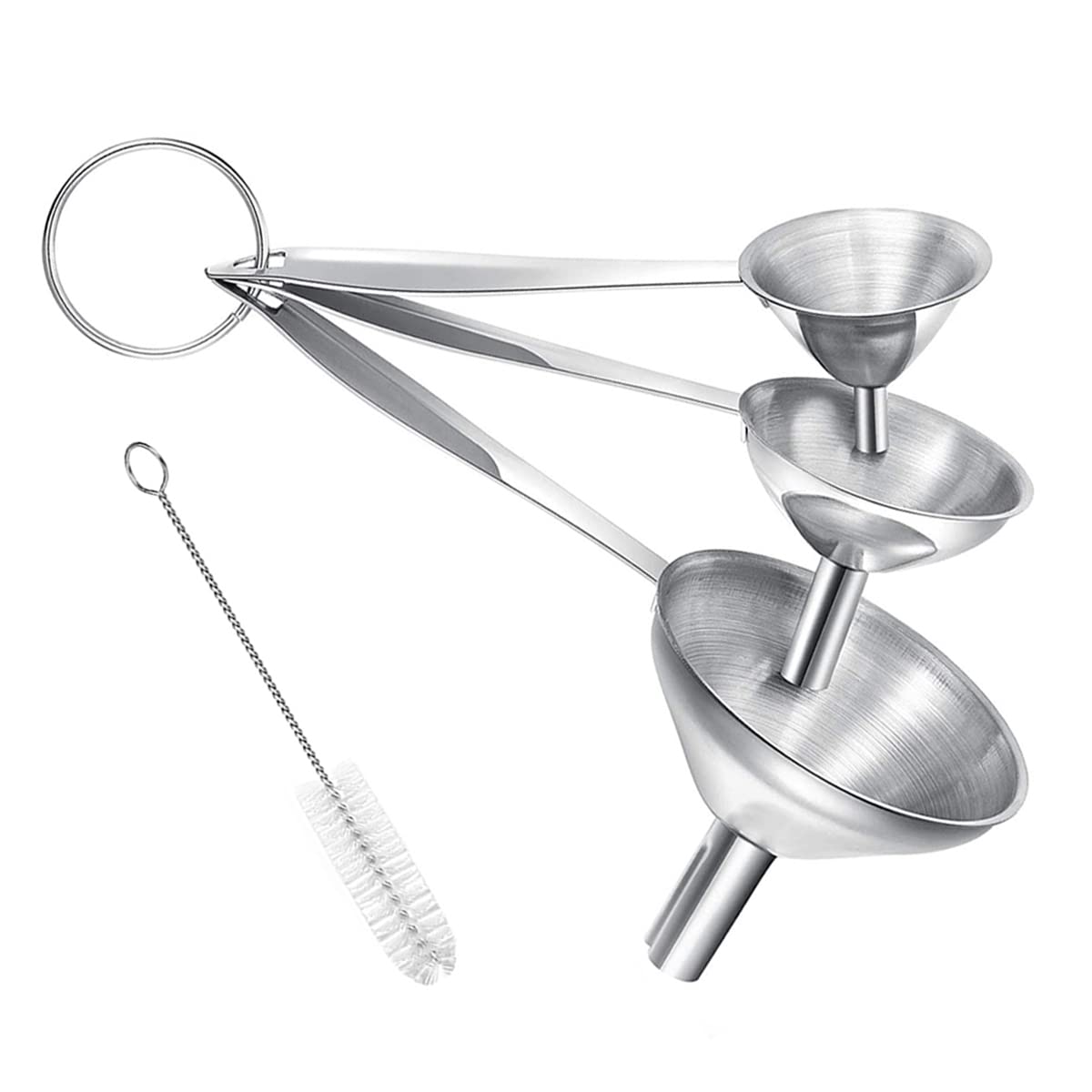
Three-piece stainless-steel mini funnel set
The listing describes a groove in the funnel stems, with stem diameters of about 0.5, 0.4 and 0.2 in. Compare each stem with the opening on your chosen bottle.
Check dimensions and set contents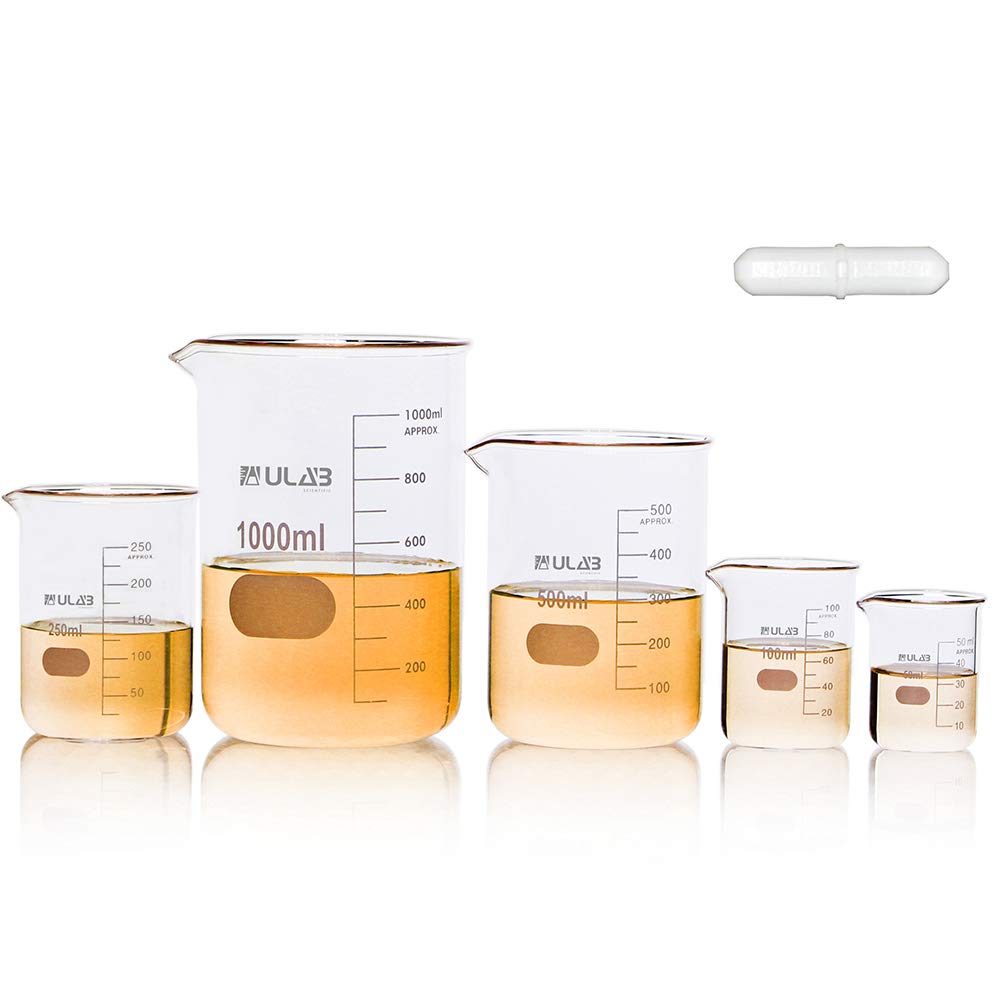
ULAB borosilicate beaker set, five sizes
The listed set includes several capacities, including 500 mL. Check the current package and graduation details; do not treat beaker markings as precision measurements.
Check sizes and package contents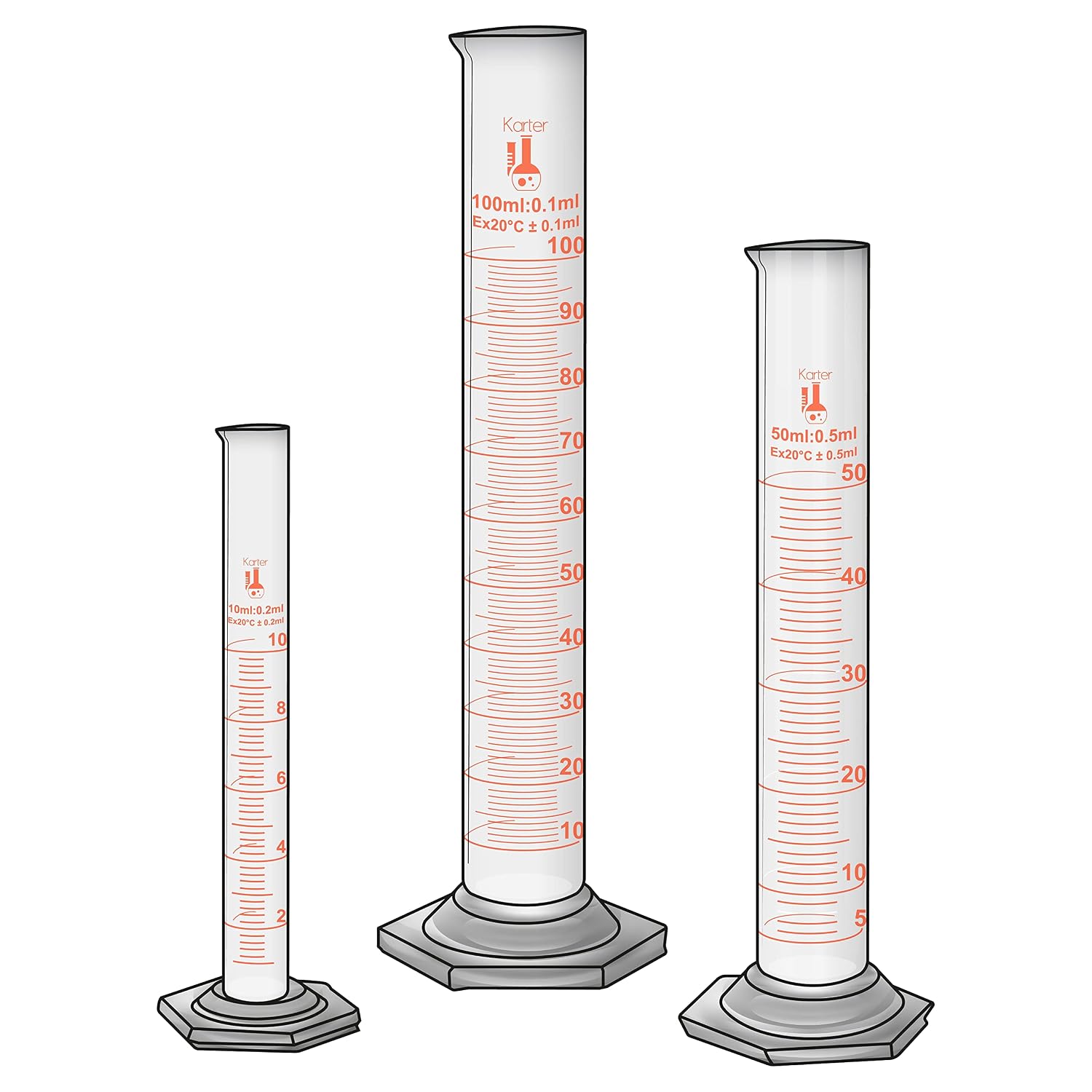
Karter Scientific glass graduated-cylinder set
The checked title describes three cylinders in 10, 50 and 100 mL sizes. Review the current graduations and maker’s accuracy information.
Check sizes and stated tolerancesWhat do the markings establish?
Beaker markings are useful for rough transfers and mixing, but a listing’s appearance alone does not establish an accuracy class. If a volume must be precise, compare the maker’s stated tolerance for the exact measuring vessel.
For bottle color and storage-location tradeoffs, read amber versus clear jars. For a broader shelf plan, use the beginner apothecary checklist.