Start with where the jars will live
Choose a cabinet, drawer, or open shelf before choosing glass color. University of Minnesota Extension advises storing dried herbs in airtight containers away from heat and light. That guidance makes the placement a separate decision from the appearance or color of a particular jar.
Write down the actual conditions: direct sun, heat from a range or radiator, humidity, and how often the jar will be opened. If the location is bright or warm, changing the location may solve more of the problem than changing from clear to amber.
Then measure the space with the jar sizing worksheet. A protective-looking vessel that does not fit the shelf will not improve the routine.
Light versus visibility: match the vessel to its location
Use clear glass where the shelf is shaded and visibility helps. For exposed shelves, consider a darker location first; amber glass may reduce some light, but a color name alone does not document a UV cutoff.
| Storage location | Vessel choice | Why it may fit | Example or next step |
|---|---|---|---|
| Closed cupboard or pantry | Clear glass jar | A closed cupboard or drawer reduces light exposure and keeps the contents visible; it does not guarantee a particular temperature or seal. | 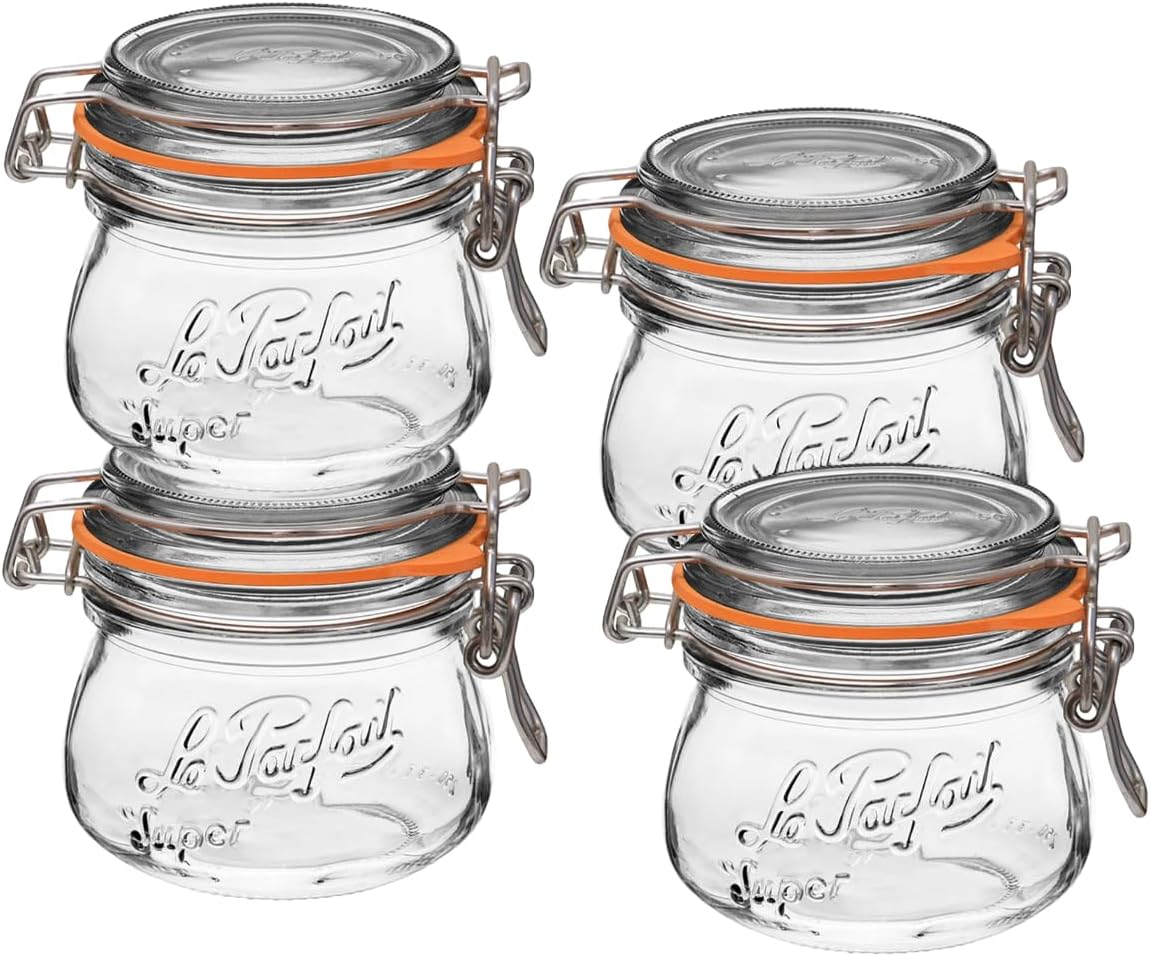 Le Parfait Super Jar, 250 mL, 4-pack |
| Counter with frequent access | Clear glass jar with a loose-fit lid only when its closure suits the job | The listing shows one 300 mL jar with a bamboo lid and spoon. It does not establish a silicone ring or long-term moisture seal. | 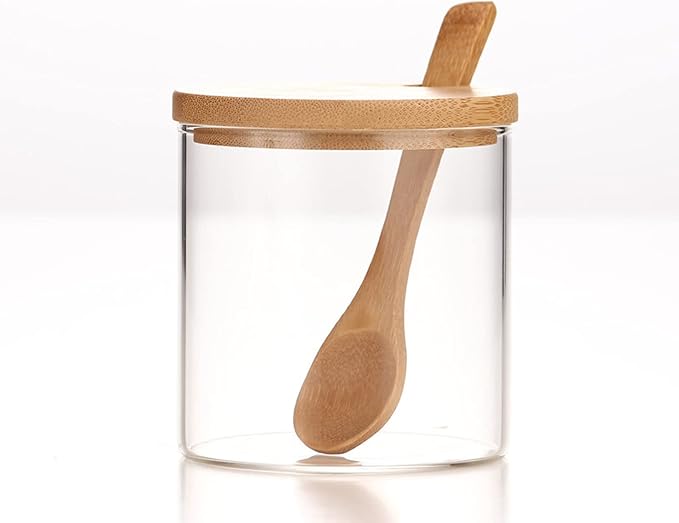 Clear bamboo-lid jar with wooden spoon, 300 mL |
| Open shelf near daylight | Amber glass may reduce some incoming light | Amber color is not a quantified UV or blue-light rating. Check the listing for a stated UV or blue-light specification before relying on the color. | 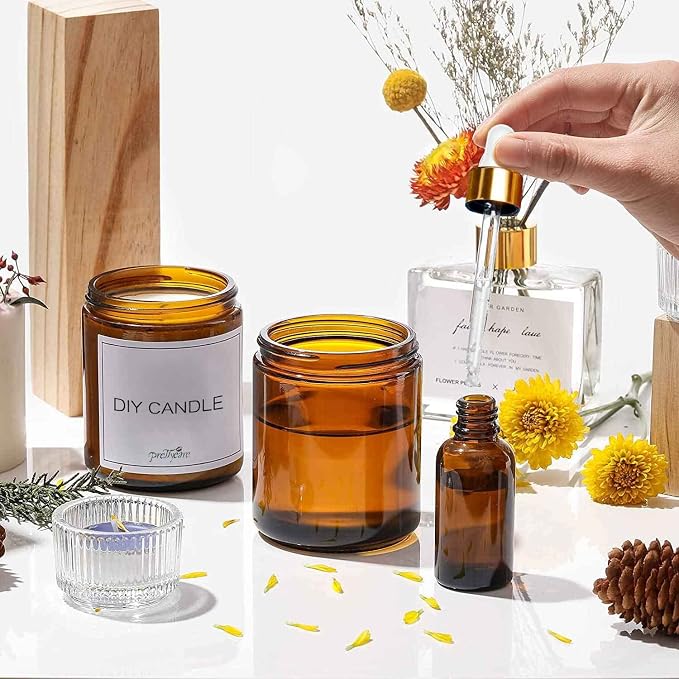 PrettyCare 8 oz amber jars, 12-pack (verify current listing) |
| Sunny worktop with clear jars | Move the jars into a closed cabinet, drawer, or box | Changing the location can reduce direct exposure while keeping clear walls visible when the jar is in use. No cabinet product is recommended here. | Use a cabinet, drawer, or lidded box already available. |
| Dry back-stock in a low-light closet | Opaque pouch, if the contents and use match the maker’s instructions | The listing describes 1-gallon pouches and 8.7 mil total thickness, with 60 oxygen absorbers. Pouch performance depends on the seal and correct handling. | 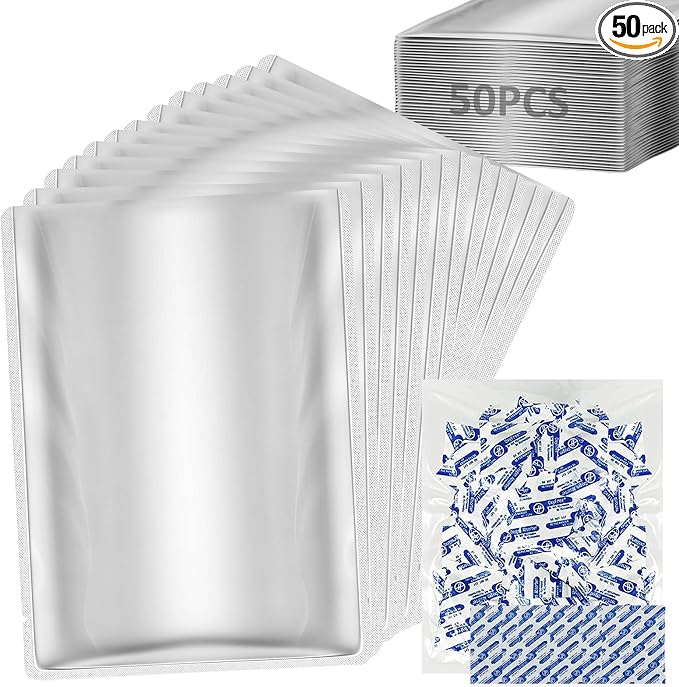 One-gallon Mylar bags, 50-pack |
Check the listing for the jar count, size, and closure before ordering. The Mylar listing describes bag thickness and absorber count; it does not establish complete oxygen blocking or guarantee storage life.
Separate glass color from a documented claim
Amber, green, or painted glass may change the light reaching the contents, but the color name by itself is not a tested UV specification. Treat a light-protection statement as a product fact only when the manufacturer documents it for the exact glass and configuration you are considering.
Choose clear
When visibility is the useful feature
Clear glass lets you see the contents and can make a labeled shelf easier to scan. Plan a darker storage location if light is a concern.
Choose colored
When the exact product documents the benefit
Use the manufacturer’s specification for the actual glass, not a general assumption about every amber jar on the market.
Choose location
When the shelf is the variable you can control
A cabinet away from heat and direct light may be the simplest change when the jar documentation is incomplete.
Check the closure and opening separately
Jar color does not tell you whether the closure matches, seals, or cleans easily. Check the neck finish, gasket or liner information, opening diameter, and removal instructions for the exact vessel. A wider opening may make filling easier, while a closure still needs its own documentation.
For amber examples, compare the PrettyCare 12-pack and Goiio 24-pack cards on the jar picks page. Both need current listing confirmation; color alone does not document a light-protection level or a closure.
For a low-profile hinged vessel, read the exact caveat on the jar comparison page. A lid that works for dry shelf storage is not automatically suitable for liquid storage.
Make the choice from your actual conditions
Choose clear glass when visibility and an away-from-light location solve the job. Choose colored glass when the exact product documents a benefit relevant to your conditions. If the glass claim or closure is unclear, choose the better-documented jar or delay purchase until the missing fact is answered.
- Name the use. Dry shelf storage, a craft project, and liquid handling are different decisions.
- Note the conditions. Include light, heat, humidity, shelf dimensions, and how often you open the jar.
- Check the listing. Confirm the glass, thread, closure, opening, and dimensions in the current listing.
What jar color cannot confirm
Color alone does not show how long herbs will keep, whether a jar blocks UV light or seals airtight, or whether it suits food storage. Check the manufacturer’s specifications and qualified food-storage guidance.
- Storage context: University of Minnesota Extension herb guidance.
- Current jar listings: Amazon jar picks. Check the selected variant before ordering.