
At a glance
- Common name
- Comfrey / Knitbone
- Botanical name
- Symphytum officinale
- Family
- Boraginaceae
- Parts mentioned in historical records
- Leaves and root
- Traditional correspondences
- Saturn; Water / Earth
Identification and foxglove look-alike
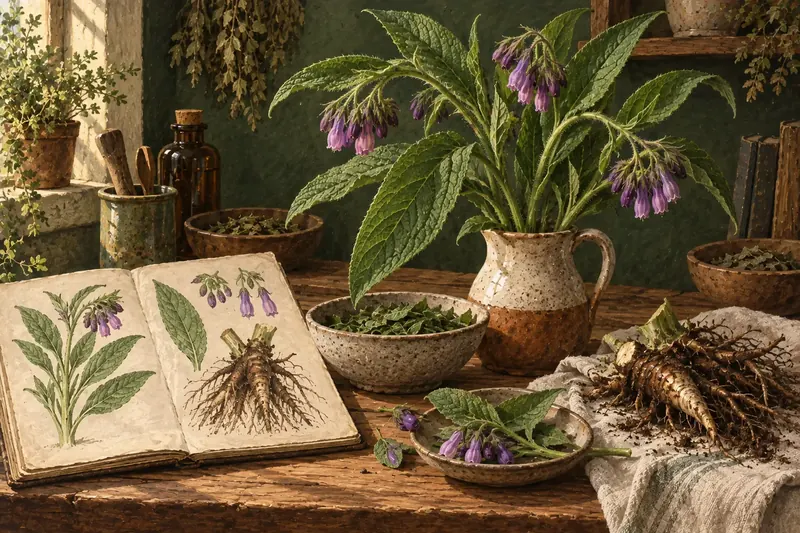
Young comfrey and foxglove rosettes can be confused. Kew notes that foxglove leaves have been mistaken for comfrey and that ingestion can cause severe poisoning. Leaf feel or edge alone is not a safe identification method; do not harvest an unidentified rosette for pantry use.
Historical record
Comfrey's older English names include “Knitbone,” “Boneset,” and “Bruisewort.” These names are historical language, not evidence of an effect or instructions for use.
Folklore and mythology
Travelers placed a dried root piece into their luggage to guarantee it would not be lost or stolen during transit. Worn by gamblers to secure winnings and avoid bankruptcy.
Sacred to Saturn, ruler of bones, joints, boundaries, and skeletal structure. In Greek lore, it was associated with Chiron and other stories of endurance.
Tradition: Greco-Roman & European Folklore Associated figures: Saturn & Chiron
Mystical correspondences
Correspondences vary by tradition and source.
Is comfrey safe to use?
Comfrey leaf and root are sources of pyrrolizidine alkaloids (PAs). The FDA lists comfrey as a PA source and links its safety communication advising supplement manufacturers to remove comfrey products from the market. The European Medicines Agency notes that PAs in comfrey root can harm the liver when taken by mouth. This guide does not recommend eating, brewing, or applying home-prepared comfrey.
This page is lore only. Do not purchase or use Comfrey / Knitbone.
If dried leaf is kept for botanical study or garden use, store it apart from food and label the container clearly as non-culinary.
Exposure note: EPA indoor-particle guidance says burning can add particles and advises ventilation. ASPCA plant entries address ingestion, not smoke exposure. See the sourced burning, pet and pregnancy lookup; neither source clears this plant as safe to burn.
Sources
- The FDA's ingredient information for comfrey identifies it as a source of pyrrolizidine alkaloids and links to the agency's 2001 safety communication.
- The European Medicines Agency's comfrey-root summary describes the liver toxicity of pyrrolizidine alkaloids when taken by mouth.
- Kew's Digitalis purpurea profile describes the foxglove rosette and the risk of misidentification with comfrey.