
At a glance
- Common name
- Frankincense
- Botanical name
- Boswellia species, including B. sacra, B. serrata, and B. frereana
- Family
- Burseraceae
- Parts mentioned in historical records
- Aromatic tree resin tears
- Traditional correspondences
- Sun; Fire
 Open on Amazon ↗
Species, grinding, and storage
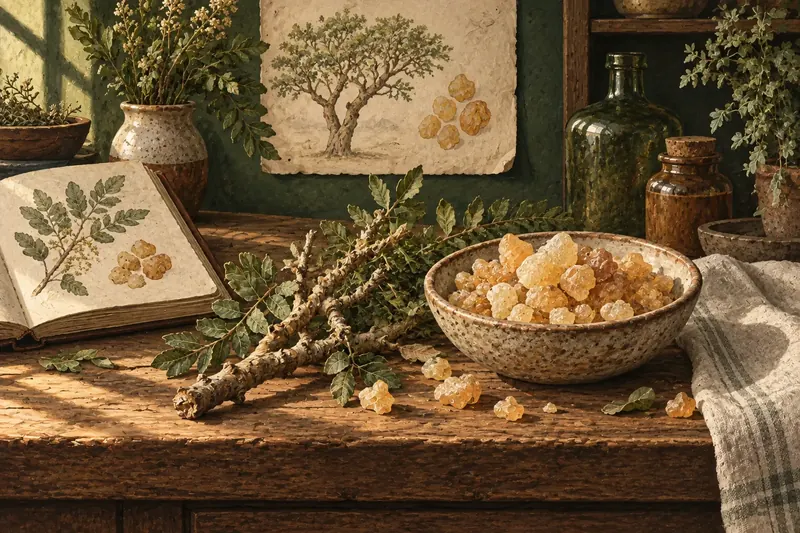
Frankincense is a trade name for resin from several Boswellia species. Kew accepts B. sacra and lists B. carteri as a synonym; B. serrata and B. frereana are separate species. Resin color and aroma vary and cannot confirm a species on their own, so check the botanical name on a label when it is provided.
Resin can stick to grinder blades and shared kitchen surfaces. Do not use an electric blade grinder or food-preparation tools for resin. For a dry craft, use a separate hand mortar and keep the resin away from food, flame, and heat.
Resin tears vary in size and density, so there is no dependable fixed volume-to-weight conversion. Choose a clean, dry, sealed container for the actual amount being stored and keep it away from stove heat.
Historical record
Harvested from desert resin trees for over 5,000 years. Fueled the legendary ancient Incense Trade Route across the Arabian peninsula; one of the three gifts of the Magi to the Christ child.
Folklore and mythology
Burned continuously in temples throughout Egypt, Judea, and Rome to carry prayers to heaven. Legend said the phoenix built its nest of frankincense and myrrh before bursting into flames and resurrecting.
Offered to solar deities such as Ra, Apollo, and the God of Abraham in temple rituals. Symbolizes the transcendent divine spark, eternal sun, and spiritual resurrection.
Other stories described frankincense as the sweat of the gods and as a gift brought by Melchior to the infant Jesus.
Tradition: Ancient Egyptian & Abrahamic Associated figures: Ra & God of Abraham
Mystical correspondences
Correspondences vary by tradition and source.
Is frankincense safe to use?
Historical and spiritual associations do not establish that Frankincense is safe or effective. Do not use this page as instructions for ingesting, smoking, inhaling, or applying Frankincense.
Exposure note: EPA indoor-particle guidance says burning can add particles and advises ventilation. ASPCA plant entries address ingestion, not smoke exposure. See the sourced burning, pet and pregnancy lookup; neither source clears this plant as safe to burn.
Sources
- Kew accepts Boswellia sacra and lists B. carteri among its synonyms in Plants of the World Online.
- Kew records Boswellia serrata and Boswellia frereana as separate accepted species.
- Kew's frankincense overview explains that the trade name covers resin from several Boswellia species.