
Do regular-mouth lids fit wide-mouth jars?
No. Regular and wide-mouth lids use different opening sizes. Match the exact jar mouth and thread before buying a replacement.
Ball’s jar selection guide separates regular-mouth and wide-mouth jars. Lid maker reCAP lists its regular lids for 70 mm / 2.5-inch openings and wide lids for 86 mm / 3-inch openings on continuous-thread jars. Those are listed fit standards; confirm the exact maker, model and part number before ordering.
| Label | Listed opening | Check before purchase |
|---|---|---|
| Regular mouth | 70 mm / 2.5 in | Exact jar thread and reCAP lid model |
| Wide mouth | 86 mm / 3 in | Exact jar thread and reCAP lid model |
For swing-top or clip jars, the opening alone is not enough. The maker may require a particular replacement gasket or lid. Kilner’s replacement-seal information is tied to the maker’s jar range; check the exact model.
What should I check before ordering a replacement lid?
- Read the jar label. Record the maker, model, mouth type and thread or closure system.
- Match the lid part. Check the closure maker’s compatibility list. A similar diameter or photo is not proof of fit.
- Check the gasket or liner. Use the exact replacement and follow the maker’s cleaning instructions.
- Keep the use in scope. A closure for dry storage is not automatically a canning, liquid or leakproof closure.
The jar maker’s part list controls. If it does not name your jar, ask the maker or choose a documented match.
Closure compatibility and material limits
Choose the exact closure for dry storage, display, or liquid handling. A matching lid does not by itself establish food suitability, chemical compatibility, leak resistance, airtightness, or storage life.
| Closure mechanism | Material and fit | Possible job | Limits and skip case | Example listing |
|---|---|---|---|---|
| Wire-bail clamp | A wire lever presses a rubber gasket against its jar rim. Confirm the gasket type and care instructions for the exact model. | A working jar for dry material when the gasket is in good condition and the jar maker supports the intended use. | Check gasket condition and replacement compatibility; a worn or mismatched gasket may not seat. | 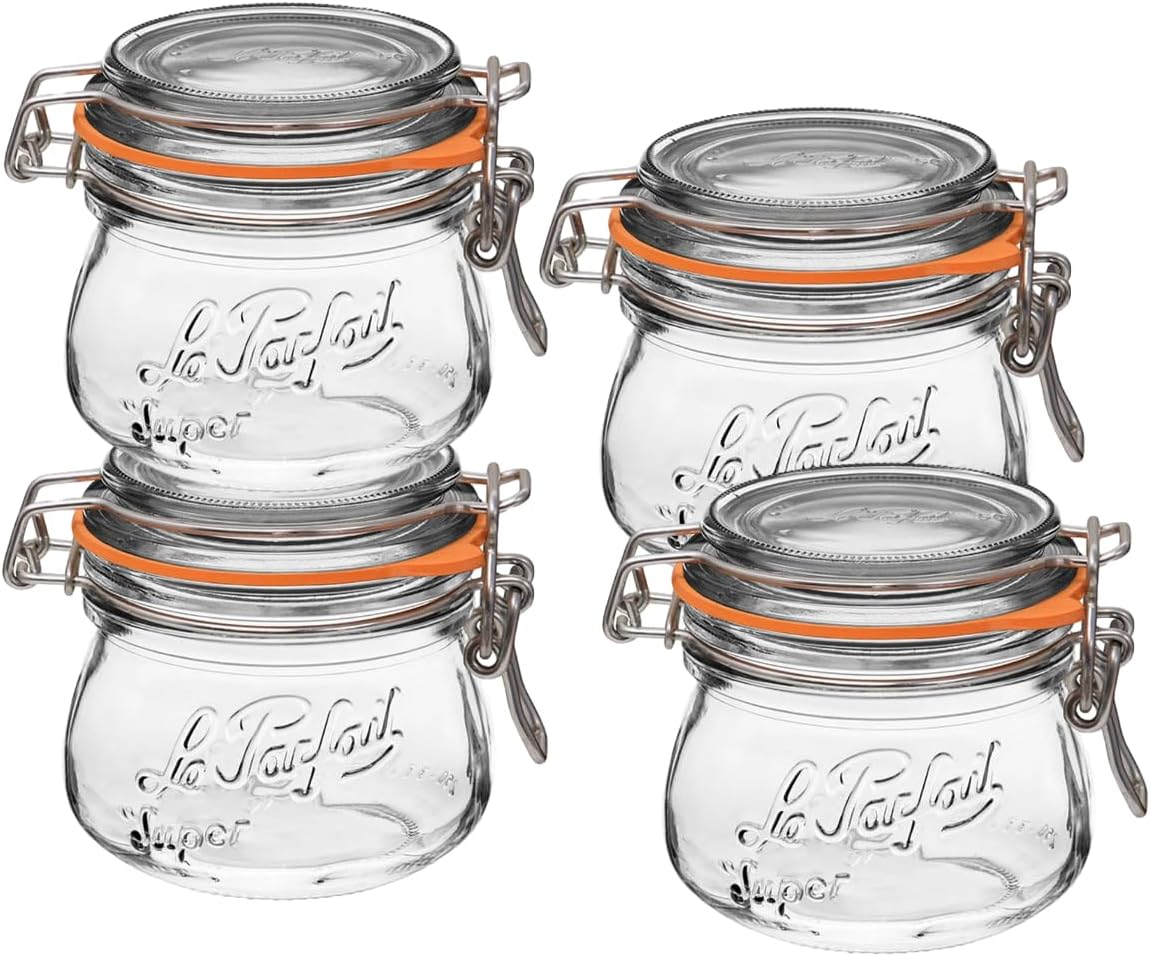 Le Parfait Super Jar, 250 mL, 4-pack |
| Clip-top jar | A hinged clip compresses a rubber seal against the rim. The maker’s replacement seal applies to named models. | A dry working jar where the matched clip and seal are convenient. | Do not infer a perfect seal or preservation time from the closure style; check maker’s care and replacement guidance. | 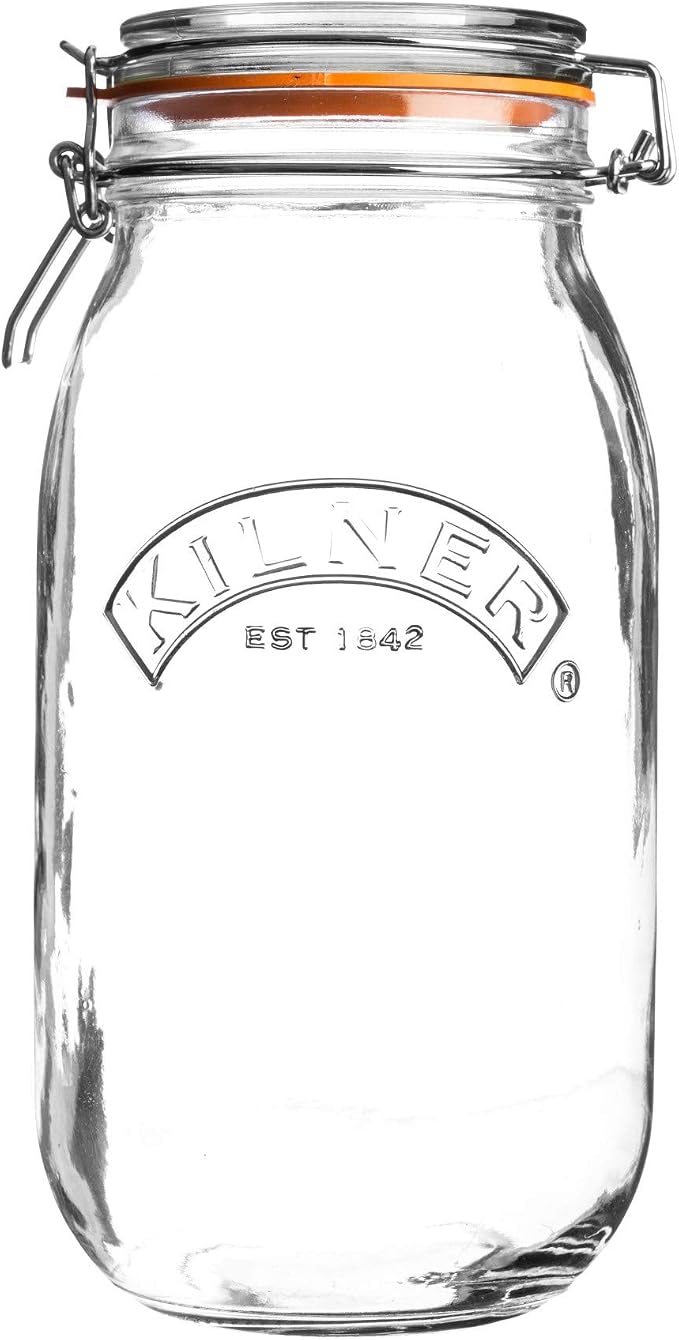 Kilner Round Clip-Top Jar, 2 L |
| Two-piece canning lid | A matching band secures a metal flat with its liner. Mouth size and thread must match the jar. | A dry back-stock jar when the lid maker confirms the exact fit and intended use. | Do not use a canning lid as a chemical barrier for vinegar, tinctures, or other liquids. Parchment beneath the lid does not substitute for a container rated for that liquid. | 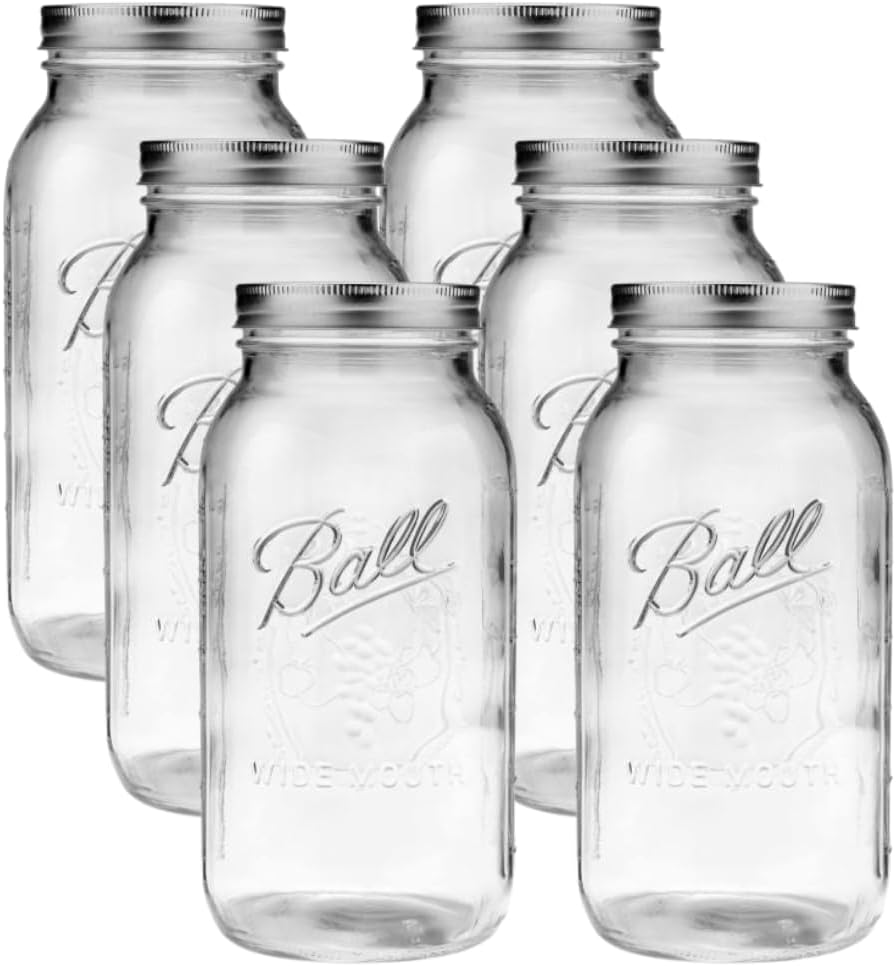 Ball Wide-Mouth Half-Gallon Jars, 6-pack Listing bullets conflict on lid type; confirm included lids. |
| Bamboo lid with spoon | The accessible listing shows one 300 mL jar and a bamboo lid with wooden spoon; it does not confirm a silicone ring. | A small counter jar for frequent access when the exact closure suits the use. | Do not rely on this listing for a gasketed moisture seal or long-term storage; verify fit and care details. | 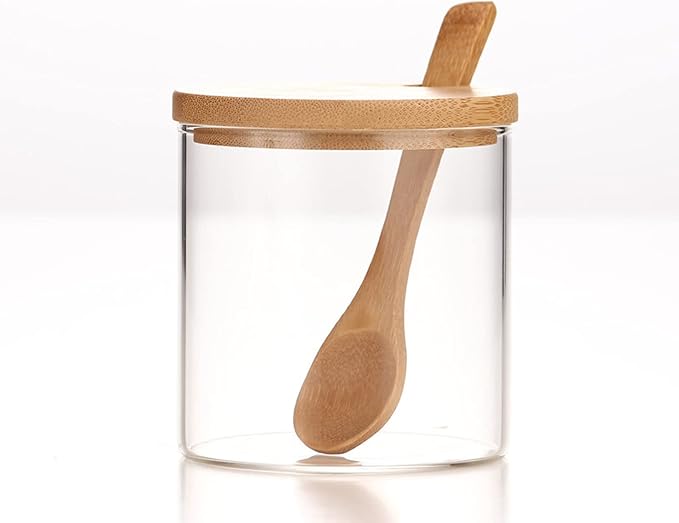 Clear bamboo-lid jar with wooden spoon, 300 mL |
| Resting glass lid | A removable glass lid sits on the jar; no gasket was identified in the accessible listing. | Dry display or scoop storage where a gasket is not required. | Do not treat a resting lid as airtight, insect-proof, or suitable for liquids. | 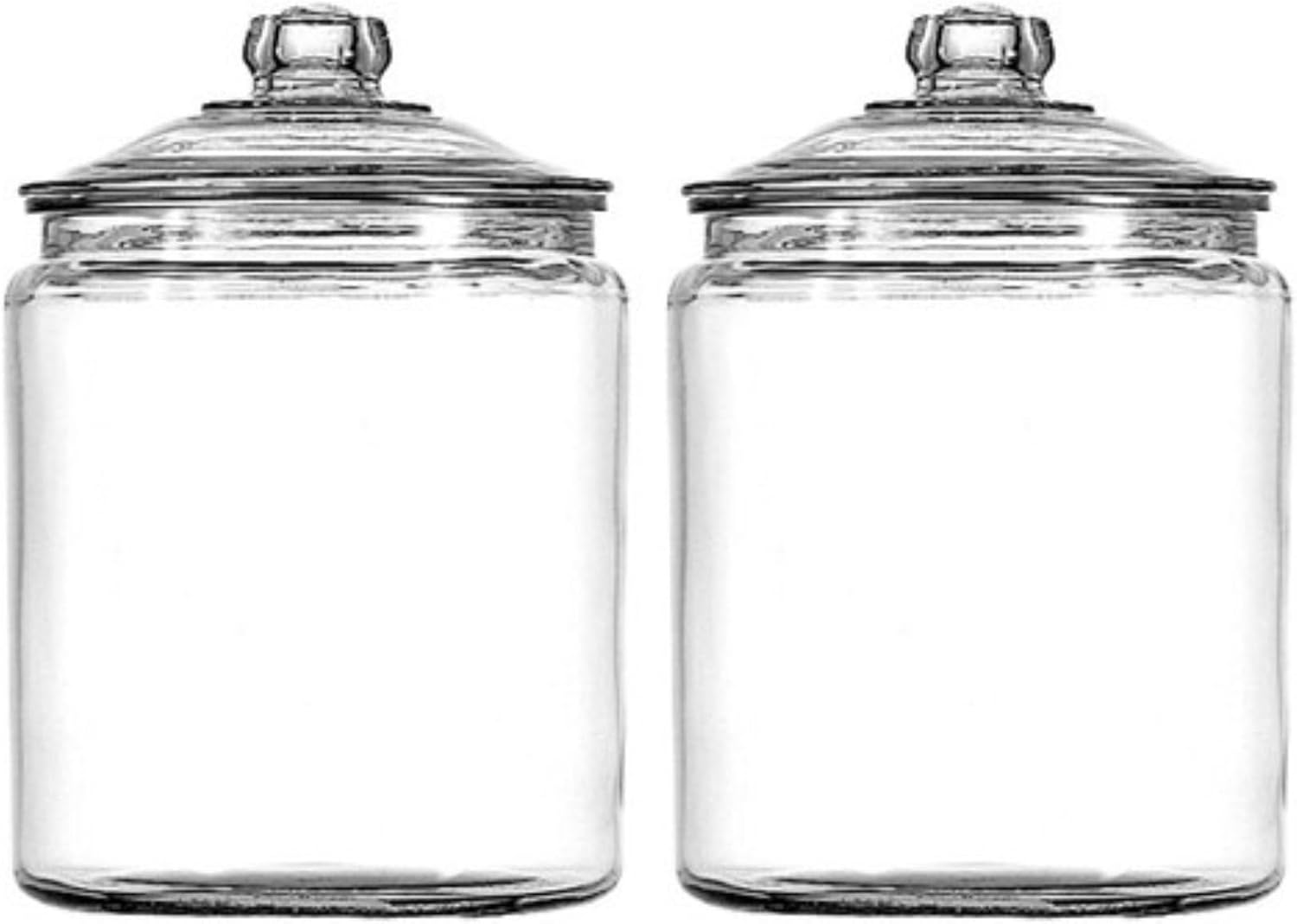 Anchor Hocking Heritage Hill jar, 1 gallon, set of 2 |
| Natural cork stopper | A cork fits by friction in a narrow glass neck; the exact fit depends on the vial and stopper. | A dry craft sample or display vial where easy removal matters more than a documented moisture seal. | Cork is not a verified airtight or liquid-safe closure; check the vial maker before using with liquids or oils. | 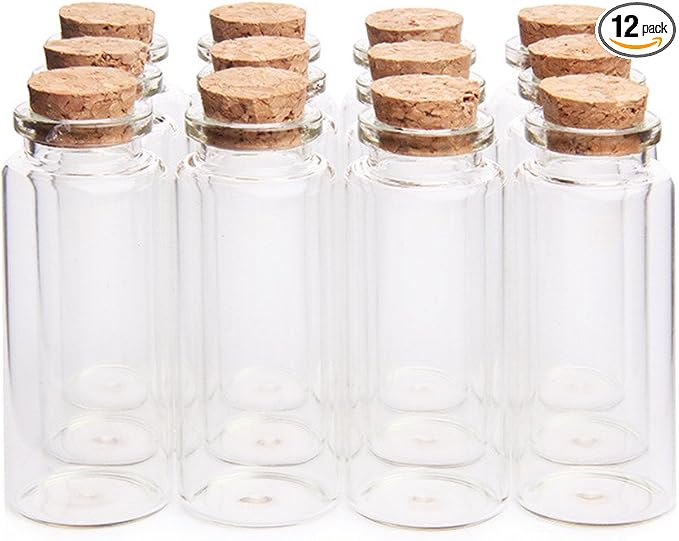 Danmu mini glass vials with corks, 30 mL |
| Opaque storage pouch | The listing describes 1-gallon pouches with 8.7 mil total thickness and 60 oxygen absorbers. Follow the pouch maker’s seal instructions. | Dry back-stock when the pouch and absorber match the contents and handling plan. | Seal quality and absorber use matter. The listing does not prove complete oxygen blocking, liquid compatibility, or a storage-life guarantee. | 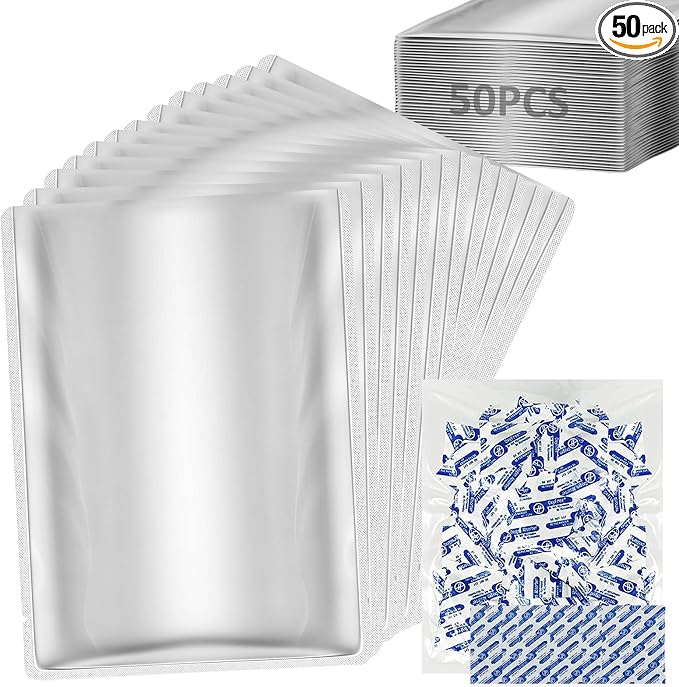 One-gallon Mylar bags, 50-pack |
Do spell jars need to be sealed with wax?
There is no universal spell-jar closure rule. Use a lid or cork that fits the vessel. Treat melted wax as decoration unless the jar and closure maker documents it as a functional seal.
For a screw-top jar, close the matching lid as intended. For a cork vial, choose a cork that matches the mouth and sits securely without forcing it. A wax bead, ribbon or paper seal over the closure does not establish an airtight or leakproof seal.
If you choose a decorative wax seal, do not heat the jar itself or let a flame contact the glass, herbs, label or nearby fabric. Follow the candle or wax product’s directions and keep any flame at least 12 inches from materials that burn. The candle safety guide covers flame and botanical boundaries.
These are physical fit notes, not rules for anyone’s spiritual practice. No product standard for “spell-jar sealing” was located in the jar makers’ fit documents reviewed.
What a lid listing cannot prove
A photo or diameter by itself cannot establish food suitability, airtightness, liquid resistance or preservation time. Follow the exact maker’s product and care instructions. Use the jar sizing calculator to plan capacity and shelf fit, then compare the exact jar listing.
- reCAP Mason Jars FAQ lists regular and wide lid sizes.
- Ball jar selection guide distinguishes mouth types.
- Kilner replacement lids and seals are listed for named products.