
At a glance
- Common name
- Mugwort
- Botanical name
- Artemisia vulgaris
- Family
- Asteraceae
- Parts mentioned in historical records
- Flowering aerial tops, leaves, root
- Traditional correspondences
- Moon; Earth / Air
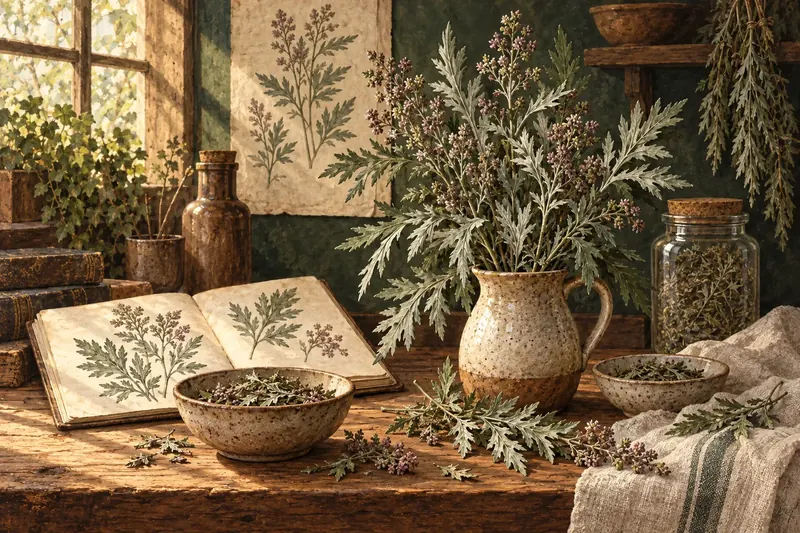 Open on Amazon ↗
Historical record
Revered in the Anglo-Saxon 9th-century 'Nine Herbs Charm' as 'Una', the oldest and fiercest of herbs. Ancient Roman soldiers placed sprigs in their sandals to alleviate foot fatigue during long marches.
Folklore and mythology
Hung over doors on Midsummer's Eve to ward off malicious spirits and lightning. Sleeping on a mugwort pillow induces vivid, prophetic dreams. Travelers carried it as an amulet against beasts and sunstroke.
Dedicated to Artemis (Diana), the Greek virgin goddess of the hunt, wild nature, and childbirth, who was believed to grant the plant its strength to assist women in labor.
Midsummer wreaths were another recorded use.
Tradition: Greco-Roman & Anglo-Saxon Associated figures: Artemis (Diana) & Odin
Mystical correspondences
Correspondences vary by tradition and source.
Is mugwort safe to use?
Historical and spiritual associations do not establish that Mugwort is safe or effective. Do not use this page as instructions for ingesting, smoking, inhaling, or applying Mugwort.
For current safety information, check a health authority or ask a qualified clinician or pharmacist, especially during pregnancy or lactation, while taking medication, or with an allergy or health condition.
For current Mugwort safety information, see NCCIH’s Mugwort reference.
Exposure note: EPA indoor-particle guidance says burning can add particles and advises ventilation. ASPCA plant entries address ingestion, not smoke exposure. See the sourced burning, pet and pregnancy lookup; neither source clears this plant as safe to burn.