
At a glance
- Common name
- St. John's Wort
- Botanical name
- Hypericum perforatum
- Family
- Hypericaceae
- Parts mentioned in historical records
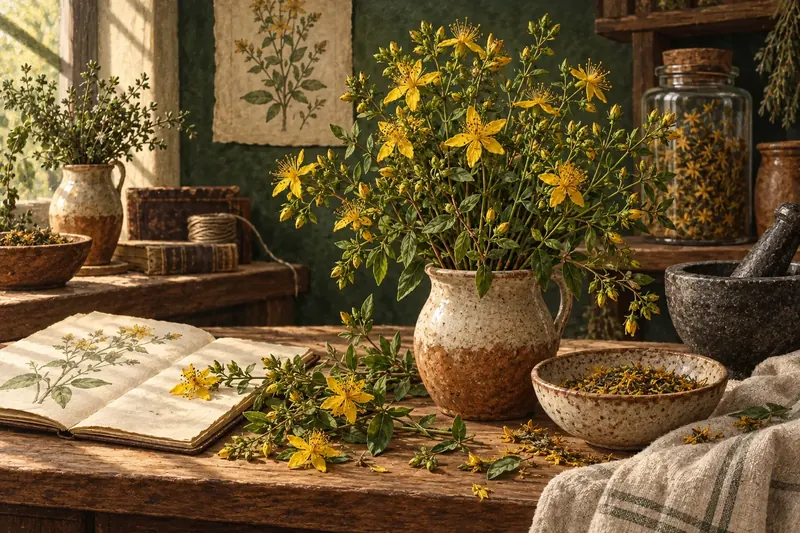
- Flowering tops
- Traditional correspondences
- Sun; Fire
 Open on Amazon ↗
Historical record
Harvested traditionally on St. John's Eve (Midsummer, June 24). Extensively cited by Dioscorides, Galen, and Paracelsus as the premier wound herb and remedy for melancholy.
Folklore and mythology
Known in old herbals as 'Fuga Daemonum' (Chaser of Devils). Hung over windows, cottage doors, and farmsteads on Midsummer Eve to repel witches, thunderbolts, and demonic apparitions.
Crushed red sap was legendary as the spilled blood of St. John the Baptist upon his beheading; in Norse lore, connected to Baldur the Sun God, representing unconquered solar light at Midsummer solstice.
Midsummer bonfires were part of the same tradition, and the herb was hung above farmstead doors as a demon chaser.
Tradition: Christian Folklore & Norse Associated figures: St. John the Baptist & Baldur
Mystical correspondences
Correspondences vary by tradition and source.
Is st. john's wort safe to use?
Historical and spiritual associations do not establish that St. John's Wort is safe or effective. Do not use this page as instructions for ingesting, smoking, inhaling, or applying St. John's Wort.
For current safety information, check a health authority or ask a qualified clinician or pharmacist, especially during pregnancy or lactation, while taking medication, or with an allergy or health condition.
Exposure note: EPA indoor-particle guidance says burning can add particles and advises ventilation. ASPCA plant entries address ingestion, not smoke exposure. See the sourced burning, pet and pregnancy lookup; neither source clears this plant as safe to burn.
Name reference
- The RHS profile lists common St. John's wort among the common names for Hypericum perforatum: RHS plant profile.