Start with the place you already have
A suitable cupboard is the simplest closed option when it fits your jars. Choose an open shelf when you want the containers visible and have a spot away from heat and direct light.
Before comparing furniture, count the jars you actually use and check the cupboard or drawer you already have. If it fits and stays easy to reach, you may not need another piece on the counter.
What should you measure before choosing a countertop cabinet?
Measure the counter’s usable width, depth, and height, including nearby walls or raised edges. Leave room to stand and open a door.
Measure the jars at their widest point, including lids and hinges. A jar can fit on a shelf but still be hard to lift out if there is no hand room.
For a countertop cabinet, compare its outside footprint with the counter, then check the inside shelf space and door clearance against your jars. Include the space needed to open the door in your sketch. Check that a jar can be lifted out with the door open. The jar sizing guide helps with shelf fit. Ask the maker when a listing leaves a measurement unclear.
Compare a closed door with an open shelf
A door hides jars when the station is closed. An open shelf keeps labels visible but leaves jars exposed to room light and dust. Choose by how you use the space, not by style alone.
| Setup | Consider it when | Check |
|---|---|---|
| Existing cupboard | You have a suitable closed space | Shelf and door clearance |
| Countertop cabinet | You want jars behind a door | Counter and cabinet interior |
| Open shelf | You want jars visible | Light, heat, dust, and pet access |
Arrange jars for everyday use
Keep the jars you reach for most easy to lift, with labels facing where you stand. Leave enough space to return each jar without moving the others.
Use the jars you own as a starting point. If they fit but are hard to use, change the arrangement before shopping. On an open shelf, face names outward and leave room to lift each jar without shifting the row. For closure details, see the jar seals and lids guide.
Jar examples for a measured setup
These examples cover jars, not cabinets. Measure your counter and containers against the selected listings before buying.
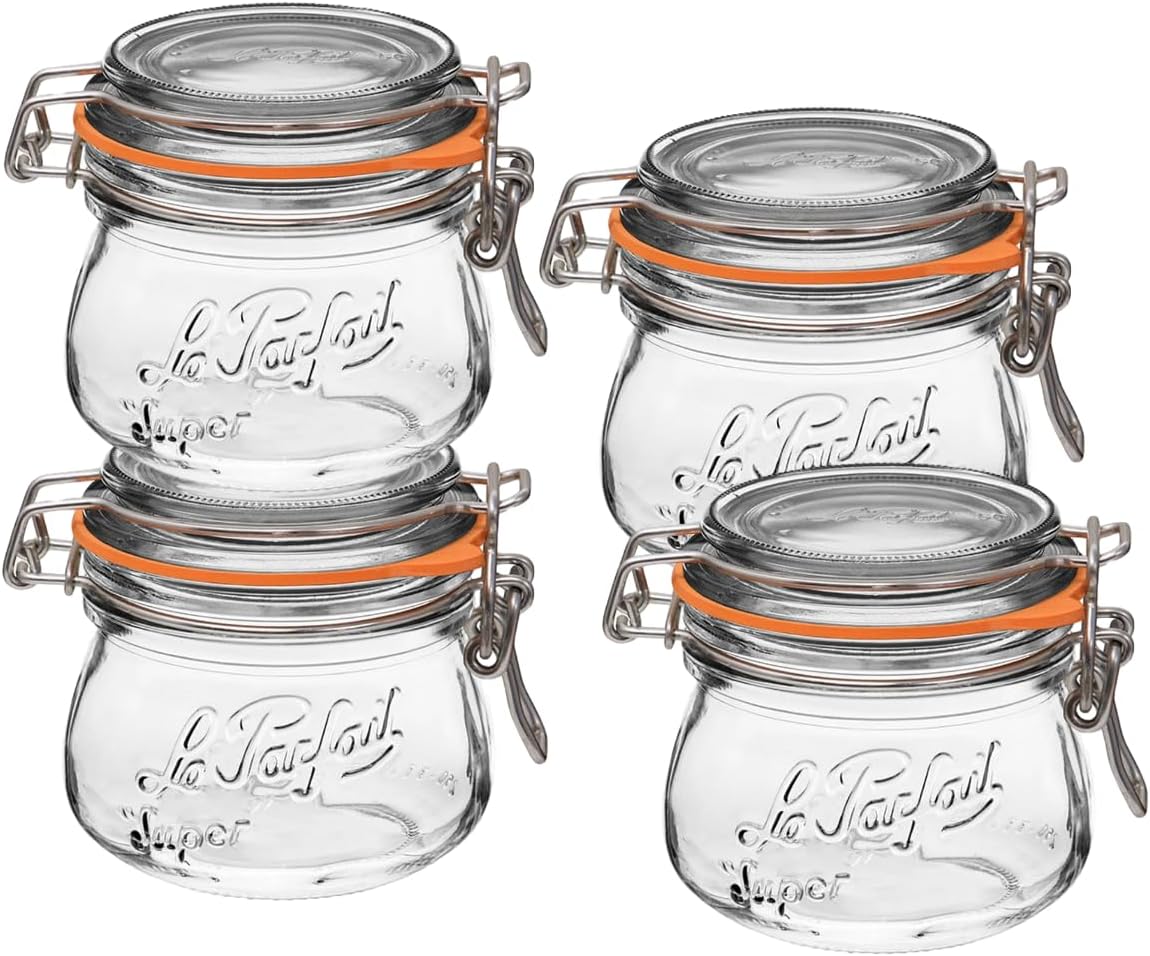
Le Parfait Super Jar, 250 mL, 4-pack
Best for: Storing smaller jars in a cupboard you already have. Skip if: You prefer open display.
See it on Amazon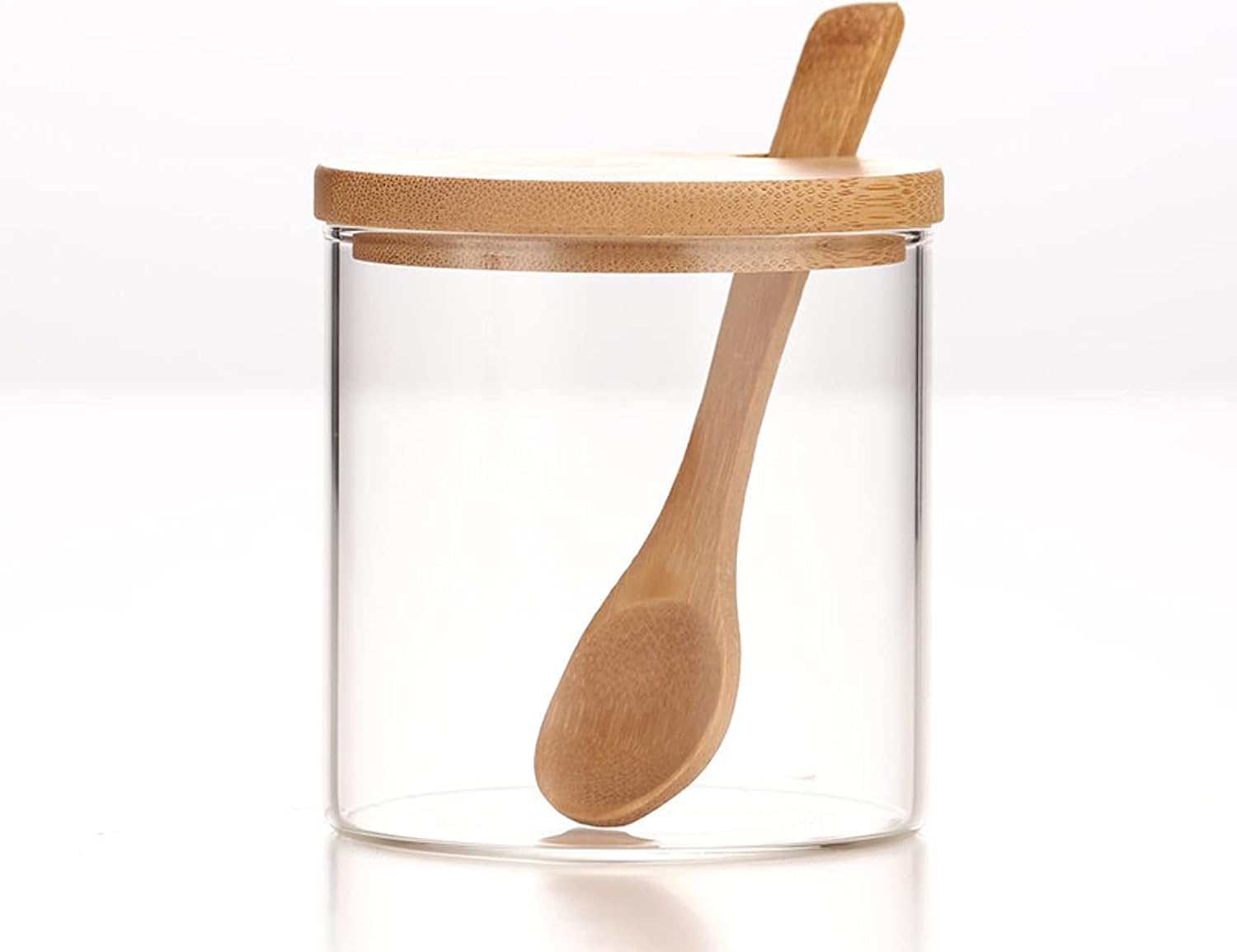
Clear 300 mL bamboo-lid jar with wooden spoon
Best for: One visible jar for a small portion. Skip if: You need a set. Check the listing for closure details.
See it on Amazon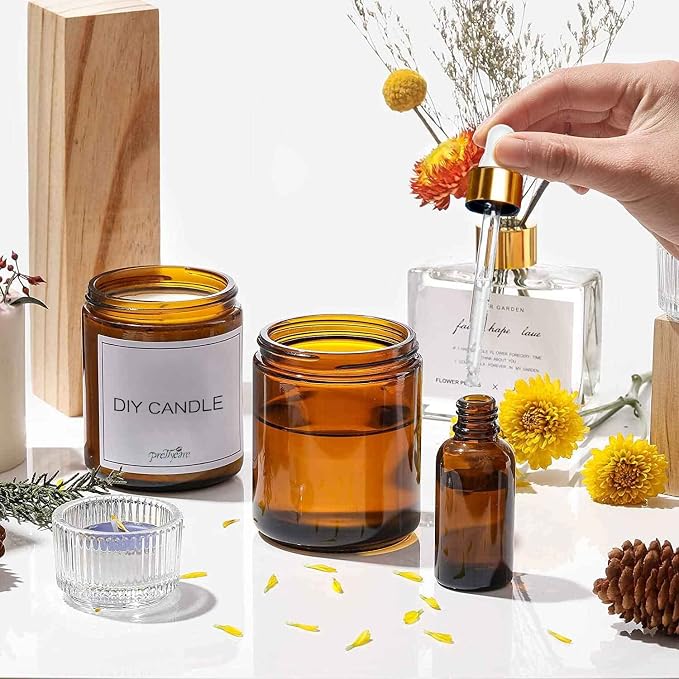
PrettyCare 8 oz amber jars, 12-pack
Best for: An open shelf where opaque glass suits your layout. Skip if: You want to see the contents.
See it on Amazon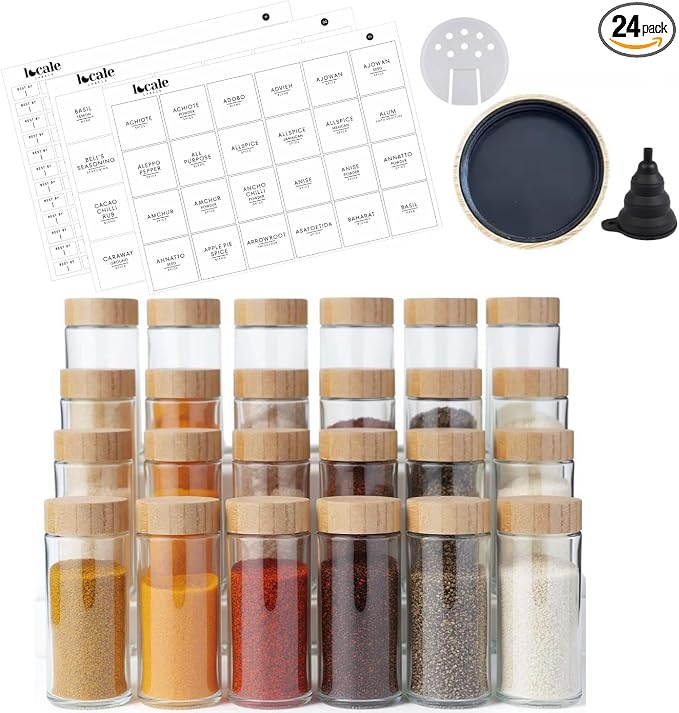
Bamboo-lid spice jars, 120 mL, 24-piece set
Best for: Grouping matching smaller portions. Skip if: Your space will not fit them.
See it on Amazon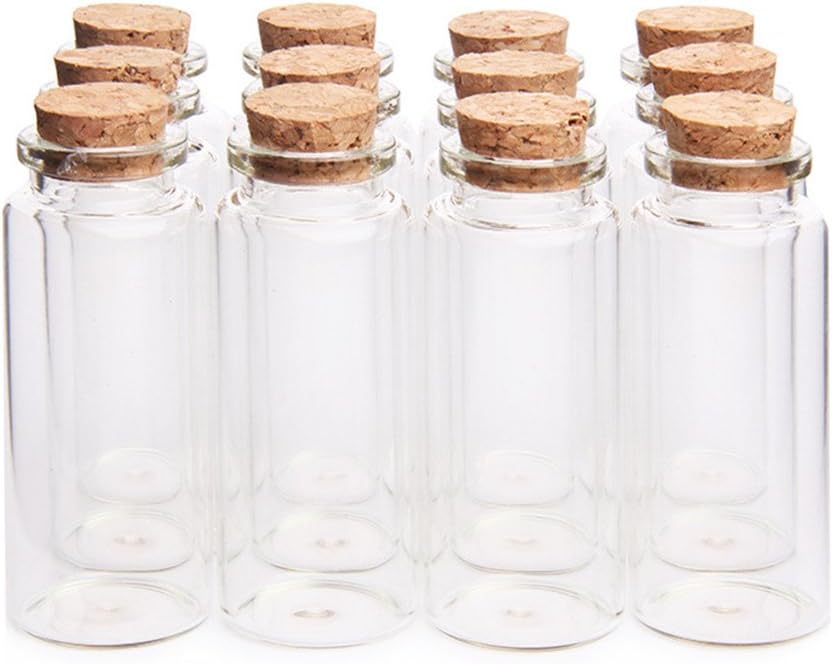
Danmu 30 mL cork vials, 12-pack
Best for: Separating small portions into individual containers. Skip if: You need a wider opening.
See it on AmazonPlacement limits
Keep jars away from direct heat and sunlight, and place them where pets cannot knock them over. An open shelf needs more dusting than a closed space.
Amber glass or a cabinet door does not prove a fixed level of light protection. The amber and clear jar guide explains why the storage location still matters.
Common questions
Does this guide recommend a countertop cabinet?
Use a cabinet only if its measured footprint and interior fit your jars; this page does not endorse a specific model.
Should I keep an open herb shelf near a stove or sunny window?
Keep jars away from heat and direct light, and place them where pets cannot knock them over.